A realistic hotel development timeline in Bali runs several years from land to opening day. Industry guides put a hotel project at two to four years from concept to opening, construction of a new-build hotel alone commonly takes 18 to 24 months, and land acquisition and company setup in Indonesia come on top of that.
The order of the work matters more than any single deadline. Each phase depends on the one before it, so a delay at the zoning stage pushes back every phase that follows.
This guide sets out six phases, what happens in each, how long each typically takes and the factors that most often slow a project down in Bali.
| Phase | Typical duration | Key output |
| 1. Land, feasibility and company setup | Several months, depending on the land search | HGB title held by a PT PMA |
| 2. Operator selection | Overlaps with phase 1 and early design | Signed hotel management agreement |
| 3. Zoning, environmental review and building approval | About 3-4 months for PBG, after KKPR and environmental approval | KKPR, UKL-UPL or AMDAL, PBG |
| 4. Design, procurement and FF&E | Runs alongside permits and construction | Construction drawings, contractors, FF&E orders |
| 5. Construction and SLF | 18-24 months or more | Completed building and SLF |
| 6. Pre-opening | Starts 4-24 months before opening | Staff, systems and a hotel ready for guests |
Durations of the hotel development timeline in Bali depend on the hotel’s size and complexity. A full-service resort with restaurants, a spa and meeting rooms sits at the longer end of every range.
The first phase of hotel development secures a plot that can legally host a hotel and a structure that can hold it. It covers land due diligence, a feasibility study of demand and nearby supply, setting up a PT PMA company and acquiring HGB title.
Company setup is the fastest part. A PT PMA can be established through the OSS system in roughly 10 to 14 days, as covered in our guide to setting up a PT PMA for a hotel. Finding and verifying the right land usually takes much longer, because the plot must be in the right zone and carry a clean title that can become HGB title in the company’s name.
Experienced developers appoint the hotel operator before the design is final. The operator’s brand standards shape room sizes, back-of-house areas, kitchens and guest flow, so bringing them in late often means redesign.
The appointment is usually made through two documents: a hotel management agreement (HMA) for running the hotel after opening, and a technical services agreement covering design and construction. PT The Cube Group signed both with CROSS Hotels & Resorts for CROSS Bali Uluwatu in 2025, as set out in our article on CROSS Hotels & Resorts’ agreement with PT The Cube Group.
Permits follow a fixed order, and no step can be skipped. The project first needs zoning conformity (KKPR), then an environmental approval, which is UKL-UPL for most mid-size hotels and AMDAL for hotels above 150 rooms or 5 hectares, and then building approval (PBG).
PBG has a statutory processing time of 28 working days once a complete application is filed. Including document preparation, the realistic timeline is about three to four months. Our article on each permit in the sequence explains what every approval certifies.
Design does not wait for permits to finish. Concept design feeds the permit applications, and detailed construction drawings, contractor tenders and procurement continue while the permits are processed and the site is prepared.
FF&E (furniture, fixtures and equipment) is ordered well before the building is complete. Imported items such as kitchen equipment, lighting and custom furniture can have long lead times, so late orders are a common reason a finished building cannot open on schedule.
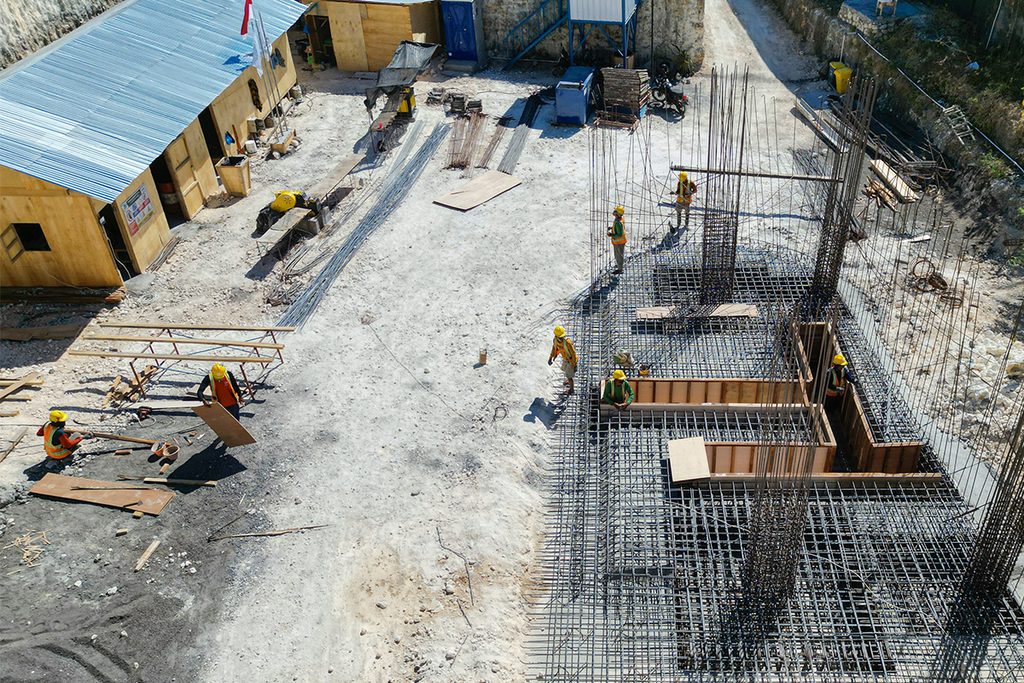
Construction is the most visible phase, but it is often not the longest part of the hotel development timeline. HVS, a hospitality consultancy, estimates that a new-build premium select-service hotel takes roughly 18 to 24 months to build in normal conditions, and a full-service resort with more facilities can take longer.
The phase ends with the certificate of function worthiness (SLF). Its physical inspection generally takes place when construction is about 90 to 100 percent complete, and the hotel cannot legally open to guests without it.
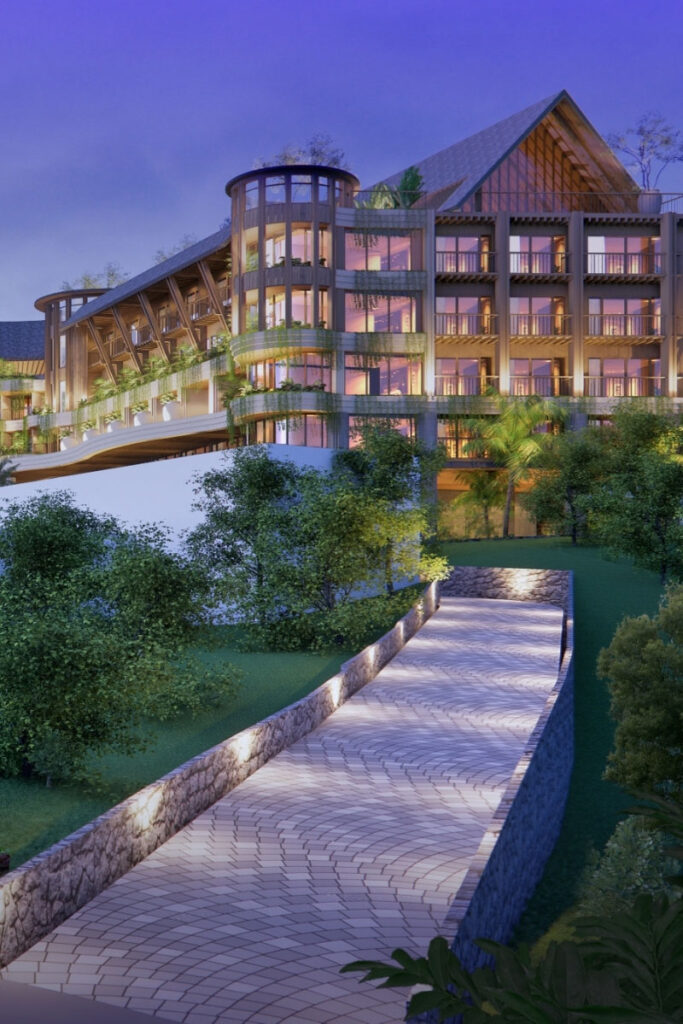
CROSS Bali Uluwatu shows where a live project sits on this timeline. The 123-key upper-upscale hotel in Pecatu, Uluwatu, has its operator appointed, its building permit secured and its earthworks nearing completion, with infrastructure works advancing on site and a target to begin welcoming guests in 2027. That places it past the land, operator and permit phases where most early-stage risk sits.
Pre-opening is the period in which a finished building becomes a working development hotel. It covers recruiting and training staff, setting up booking and operating systems, marketing the opening and running trial operations.
How early it starts depends on the hotel. HVS notes that pre-opening work can begin as early as 24 months before opening for a large, complex hotel, and as late as four to six months for a limited-service hotel without restaurants or meeting space.

A hotel development timeline in Bali is measured in years, and the slowest parts are often land, permits and design rather than construction. The most useful question for an investor is not how long the whole process takes, but which phases a project has already completed.
Three checks answer that quickly: whether an operator has signed, whether the PBG has been issued and whether construction is visibly under way. For a project that has passed all three, explore CROSS Bali Uluwatu, or read more about our approach to hotel development in Bali.

Several years from land to opening. Industry guides put concept to opening at two to four years, with construction of a new-build hotel alone commonly taking 18 to 24 ghbmonths, before adding land acquisition and company setup.u
Often not construction. Land acquisition, permits and design together usually take longer than the build itself, especially when the site or zoning needs extra checks.
Before the design is final, so the operator’s brand standards are built into the hotel. Many developers sign a technical services agreement alongside the hotel management agreement for this reason.
KKPR zoning conformity, an environmental approval (UKL-UPL or AMDAL) and PBG building approval. The SLF certificate is issued after construction, before the hotel opens.
The operator recruits and trains staff, sets up booking and operating systems, markets the opening and runs trial operations. For large hotels this can start up to 24 months before opening.