
Foreigners buying a hotel in Indonesia usually do it through a PT PMA (foreign-owned company), either by buying the shares of the company that owns the hotel or by buying the hotel’s assets directly. Under Indonesia’s Positive Investment List, hotels rated two stars and above are open to 100% foreign ownership, so the real work lies in checking the deal structure, licences, finances, staff, operator contracts and tax before you close.
Buying an operating hotel is different from buying land. The business, its employees, its contracts and any hidden liabilities can come with it, depending on how the deal is structured.
This checklist is organised by area, with the documents to request from the seller at each stage. If you first want to confirm whether a foreigner can hold a hotel at all, start with our guide on whether foreigners can own a hotel in Bali.
Every hotel in Indonesia operates under a stack of licences issued through the risk-based licensing system, OSS RBA. Confirm each one is valid, matches the hotel’s actual operations and is held by the right entity.
● NIB (Business Identification Number) registered to the company that operates the hotel.
● KBLI code that matches the hotel’s star rating. Under KBLI 2025 (BPS Regulation 7 of 2025), the former hotel code 55110 is split into 55101 (five-star) to 55105 (one-star), with non-star hotels under 55106. Licences issued before the change remain valid, according to Smart Legal, but the code in OSS should match operations.
● Risk-based licences for each activity, including restaurants and bars.
● LKPM reports filed on time, since gaps in investment reporting can trigger sanctions.
In a share deal, update the ownership data in OSS after closing. In an asset deal, plan for new licences in the buyer’s name before the hotel can trade.
A starred hotel needs a business standard certificate (Sertifikat Standar Usaha Hotel Bintang) under Tourism and Creative Economy Ministry Regulation 4 of 2021. Larger, higher-risk hotels need verification by an accredited tourism business certification body, as Invest in Asia explains. Check the certificate’s star level, issue date and expiry, and whether the hotel still meets the standard.
Also check the supporting permits that often lapse: the hygiene and sanitation certificate for food service, and liquor permits for bars and restaurants.
Bali-specific PT PMA hotel rules
Bali adds its own filter. Since 2026, the province has restricted new PT PMA registrations for lower-tier hotels, and the risk tier depends on three factors together: guest rooms, employees and building size. If you are buying in Bali, confirm the hotel’s tier and whether the existing licence can pass to a foreign owner before you sign. Our article on PT PMA hotel rules in Bali explains the tiers.
The land and building checks for a hotel are the same as for any property purchase, so keep this stage focused:
● Land rights held as HGB (Right to Build) in the company’s name, with the remaining term and extension history confirmed at the National Land Agency (BPN).
● Zoning that permits hotel use under the regional spatial plan.
● Building approvals, meaning the building permit (PBG) and certificate of worthiness (SLF).
For the full process, see our land and asset due diligence checklist and our guide to building permits such as PBG and SLF.

The price you pay should rest on verified performance, not the seller’s projections. Ask for at least three years of history and test it against independent market data.
● Occupancy rate, by month, to see seasonality.
● ADR (average daily rate) by room type and channel.
● RevPAR (revenue per available room), which combines occupancy and rate.
● GOP (gross operating profit) and its margin, before management fees and owner costs.
● Revenue mix: rooms, food and beverage, spa and other income.
● Capex backlog: overdue renovations, equipment replacement and brand standard upgrades.
Compare the hotel’s occupancy with the wider market. In Bali, our data on benchmark occupancy in Uluwatu gives a reference point.
Documents to request: audited financial statements for three years, monthly management accounts, STR or channel reports if available, the capex plan and the asset register.

Staff and contracts often carry the costs buyers miss.
Employees. In a share deal, employees stay with the same company. If either the employee or the company does not want to continue after an acquisition, the employment ends with severance under Government Regulation 35 of 2021, as Hukumonline explains. In an asset deal, employees remain with the seller unless you rehire them. Either way, check:
● Headcount, contract types and payroll.
● Accrued severance and long-service liabilities.
● Social security (BPJS) payments.
● Any collective labour agreement.
● Foreign staff permits (RPTKA and KITAS).
Operator contracts. If the hotel runs under a hotel management agreement or a franchise, read it closely:
● Remaining term and renewal rights.
● Change of control clauses.
● Termination rights and fees.
● Fee structure.
● Brand standard obligations that may require capex.
Supplier contracts. Review long-term contracts for laundry, F&B supply and booking platforms that could bind the new owner.
A share deal inherits the company’s tax history, so tax due diligence matters most there.
● Corporate income tax, VAT and withholding tax filings and any open audits.
● PBB (land and building tax) paid each year.
● Local hotel tax: under Law 1 of 2022 on Regional Taxes (HKPD), hotel services are taxed under PBJT at up to 10%, set by each regency. Confirm the hotel has collected and paid it.
● Outstanding regional obligations, such as unpaid levies or permit fees.
Documents to request: tax returns for five years, tax audit results, PBB receipts and PBJT payment records.
Buying an existing hotel gives you immediate revenue, but it also means taking on old licences, existing staff obligations and liabilities that due diligence may not catch. A new development avoids most of that: the company, land rights and permits are set up from the start, and the operator agreement is negotiated for the asset rather than inherited.
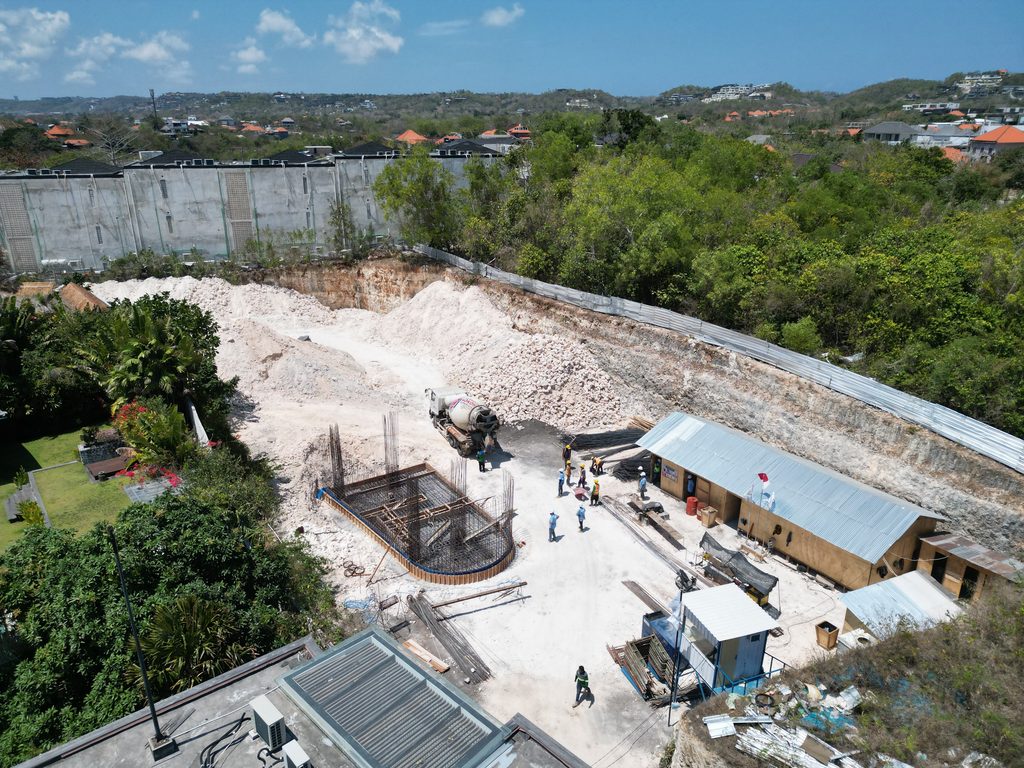
CROSS Bali Uluwatu is one example of the second route. PT The Cube Group is developing the hotel in Pecatu, Uluwatu, and has signed a Hotel Management Agreement and a Technical Support Agreement with SONO Hotels & Resorts Asia, part of SONO Trinity Group, as an appointed international operator.
Fenty S. Prawiraatmadja, Marketing Director at PT The CUBE Group Bali, sees the project as a way to link Bali’s hotel market with international travel networks and strategic investment from the start.
“Construction of CROSS Bali Uluwatu is already underway. Our development permits are secured, and a long-term Hotel Management Agreement is in place with SONO Hotels & Resorts Asia, part of SONO Trinity Group, so the project has moved past the planning stage and into its next phase. What we are building is a 123-key, upper-upscale hotel on Uluwatu’s coastline, operated under an international brand.
“What makes this partnership interesting is the way SONO Trinity Group brings hospitality, aviation and leisure together. Within that integrated travel ecosystem, Trinity Airways flies direct between South Korea and Bali every day. CROSS Bali Uluwatu is also a preferred partner of Flight Centre Travel Group, which links the hotel to international travel distribution networks.
“From the outset, our aim has been a hotel with a clear operating structure and strong international connections. With construction moving forward, we are now talking with strategic capital partners who see the long-term potential of Uluwatu and want to take part in the project’s next stage.”
Buying a hotel in Indonesia comes down to six checks: deal structure, licences, land and building, financial performance, people and contracts, and tax. A share deal keeps the hotel trading but carries its history with it, while an asset deal is cleaner but slower to restart.
If that checklist feels heavy, a new operator-managed project offers a different path into Bali’s hotel market. You can review the structure behind SONO Hotel & Resorts and compare it before committing to an existing asset.
Yes, through a PT PMA. A foreign buyer can acquire the shares of the hotel’s owning company or buy the hotel’s assets. Hotels rated two stars and above are open to 100% foreign ownership.
In a share deal, licences stay with the company, and ownership data is updated in OSS. In an asset deal, the buyer usually needs to apply for new licences in its own name.
In a share deal, licences stay with the company, and ownership data is updated in OSS. In an asset deal, the buyer usually needs to apply for new licences in its own name.
Ask for three years of audited financial statements, monthly management accounts, occupancy, ADR and RevPAR data, the capex plan and the asset register.
In a share deal, employees stay with the same company. If either side does not want to continue, employment ends with severance under Government Regulation 35 of 2021. In an asset deal, employees stay with the seller unless rehired.
Not for hotels rated two stars and above, which can be 100% foreign-owned through a PT PMA. Land must still be held as HGB by the company, because freehold (Hak Milik) is reserved for Indonesian citizens.