
A due diligence checklist for Bali property covers four things before any deposit: the land title at the National Land Agency (BPN), the seller’s right to sell, zoning and building permits, and the tax and payment trail. Investors buying into a hotel add three more: the business licence, the operator agreement and the real construction status.
Due diligence in Bali takes more work than in most markets because the answers sit in different places. The land certificate is held at the regency land office, zoning is set in regency spatial plans, building approvals run through a separate system, and some land is still sold under unregistered leases or nominee deals.
The 12 checks below are grouped by stage. Each one names the document to ask for and who confirms it, and the last section lists the red flags that should stop a deal.

No single professional covers every check, so line up the right people before you look at documents.
| Role | What they check |
|---|---|
| PPAT (land deed official) or notary | Certificate check at BPN, the sale or lease deed, filing with the land office |
| Independent property lawyer | Seller authority, contract terms, disputes, company documents |
| Licensed surveyor | Boundaries against the certificate map, access, site conditions |
| Tax adviser | Taxes owed by buyer and seller, unpaid land tax |
Use a lawyer who works for you, not one recommended by the seller or agent.
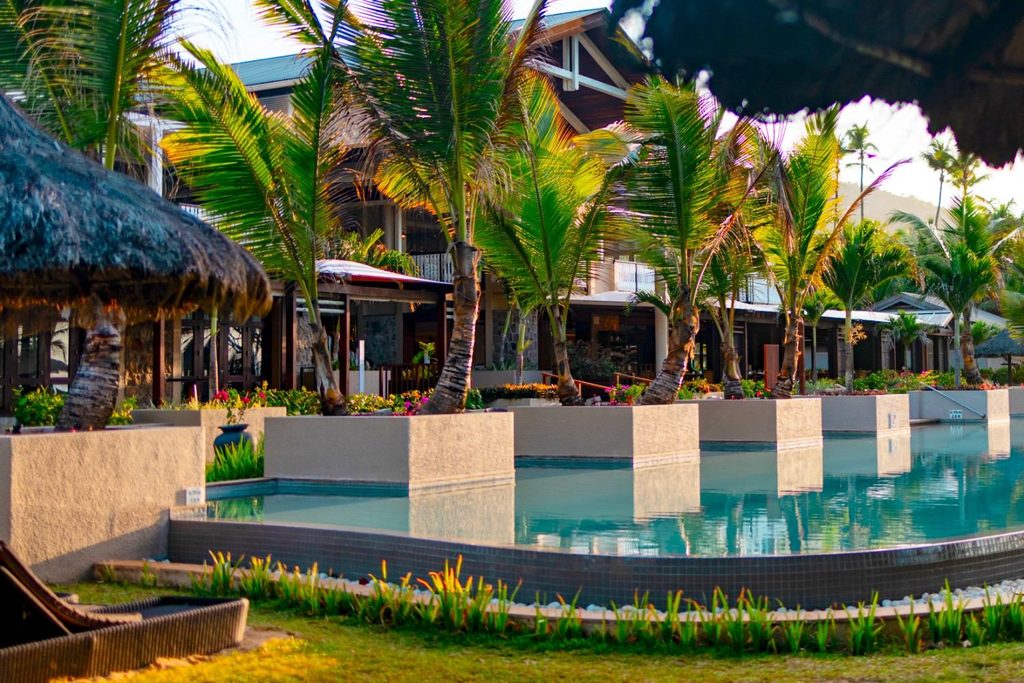
These four checks confirm that the land exists as described and that the person selling has the right to sell it.
Confirm which right the certificate records: Hak Milik (freehold, issued as an SHM certificate), HGB (right to build, issued as an SHGB certificate) or Hak Pakai (right of use). Ask to see the original, not a photocopy, and match the certificate number, area and holder’s name to the draft deed. If you are a foreigner, the right you can receive depends on this step, as our guide to whether foreigners can buy property in Bali explains.
Ask your PPAT to run an official certificate check (pengecekan sertipikat) at the regency land office before any payment. The check confirms that the certificate matches the land office records and shows any mortgage (Hak Tanggungan), seizure or dispute recorded against it. The Sentuh Tanahku app from the Ministry of Agrarian Affairs gives a quick first look, but it does not replace the formal check.
Seller verification starts with identity: the seller’s ID must match the certificate holder. If the seller is married and the land is joint marital property, Article 36 of Law No. 1 of 1974 on Marriage requires the spouse’s consent. If the land was inherited, ask for the certificate of inheritance and the consent of every heir.
Review the sale deeds behind the current certificate. Gaps, recent transfers at unusual prices, or a seller who cannot explain the history are reasons to dig further.
If the land right is HGB, our explainer on what an HGB title grants covers the term, renewal and what the holder can do with it.
A certificate proves who holds the land, not what can be built or operated on it. These three checks answer that question.
GISTARU, the ministry’s online spatial map, gives a first look at the zone. Then check the plot against the regency detailed spatial plan (RDTR) and confirm spatial-use conformity through a KKPR, which is issued through the OSS licensing system. Farmland is the high-risk case: in September 2025 the Governor of Bali announced a halt on new tourism buildings on productive agricultural land.
Any existing or planned building needs a PBG (Persetujuan Bangunan Gedung). The PBG replaced the old IMB under Government Regulation No. 16 of 2021 and is processed through the SIMBG online system. If the seller shows an IMB, have your lawyer confirm that it still covers the building as it stands today.
An SLF (Sertifikat Laik Fungsi) certifies that a completed building can be used for its approved function. Without it, the building should not be operated commercially.
Our guide to PBG and SLF permits explains how each is issued for a hotel.
These two checks stop you inheriting someone else’s tax debt and protect the money you send.
Ask for the most recent annual land and building tax notices and proof of payment. Unpaid PBB can delay the transfer at the land office.
List every cost and who pays it: the buyer’s acquisition duty (BPHTB, up to 5%), the seller’s final income tax (2.5%), the PPAT fee and legal fees. Before sending a deposit, confirm the payee name and account against the agreement, and pay only to an account the contract names.
These two checks catch the problems that never appear on paper.
Have a licensed surveyor compare the plot on the ground with the certificate map. Confirm that the access road is public or that a registered right of way exists. Landlocked plots in Bali are more common than buyers expect.
Confirm the water source (a PDAM connection or a permitted well), the electricity capacity, and drainage or slope risks. For new construction, order a soil test. Ask what the local banjar (village community) expects from owners, and get any agreed contribution in writing.
A hotel investment adds a layer of checks that a house purchase does not need:
Applied to CROSS Bali Uluwatu, the hotel project of Cube Group Bali, the published answers are: a PT PMA holds the land under HGB title, the site sits in an official tourism zone, a valid building permit is in place, and early works have started, including a certified two-storey site office, as listed on the CROSS Bali Uluwatu project page. Investors can ask for the documents behind each item before they commit.
Stop and get independent advice if you see any of these:
Legal due diligence on a Bali property usually costs a few million to a few tens of millions of rupiah, depending on scope. One Bali buying-cost guide updated in June 2026 puts a standard report and contract review at roughly IDR 5 million to 20 million, and one local consultancy lists individual land checks from IDR 15 million. Company structures and hotel assets cost more because the review covers licences and contracts too.
Timing varies with the land office and the number of documents. Basic checks can take one to two weeks; a full review with site visits and dispute history can take three to four weeks.

Run the checks in order: title and seller first, then zoning and permits, then the tax and payment trail, then the site. For a hotel, add the business licence, the operator agreement and the construction status. Any red flag is a reason to pause, not to negotiate the price down.
The same due diligence checklist for Bali property applies to a hotel investment. If you are assessing CROSS Bali Uluwatu, you can request the investment parameters and the supporting documents through the hotel investment in Bali page.
The original land certificate, the seller’s ID and any spouse or heir consents, the latest PBB receipts, the PBG (or old IMB) and SLF for any building, the zoning confirmation, and the draft sale or lease deed.
Ask a PPAT to run the official certificate check at the regency land office. The Sentuh Tanahku app gives a quick preliminary view but is not a substitute.
A standard report and contract review is reported at roughly IDR 5 million to 20 million, with company and hotel transactions costing more.
Usually one to four weeks, depending on the land office and the scope of the review.
Partly. A lawyer and PPAT can run the document checks for you, but someone you trust should still inspect the site and the boundaries in person.