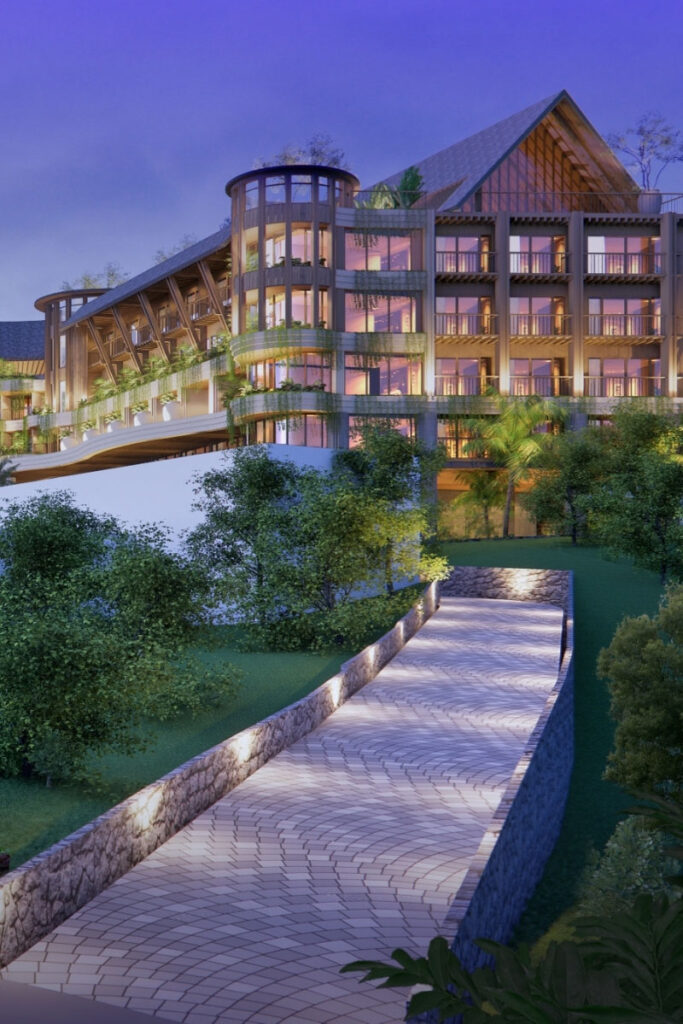
The Bukit Peninsula, including Uluwatu, remains underbuilt relative to its land values and tourism demand. Only a handful of major branded hotel projects, including Mandarin Oriental Bali and CROSS Bali Uluwatu, currently sit in its development pipeline, even as the corridor absorbs new demand faster than most of the rest of Bali.
The Bukit Peninsula runs from south of Ngurah Rai Airport through Jimbaran, Uluwatu, and Nusa Dua. Hotel supply here has historically lagged behind both land values and international brand interest compared to Canggu or Ubud, a gap that recent branded-hotel announcements suggest is starting to close.
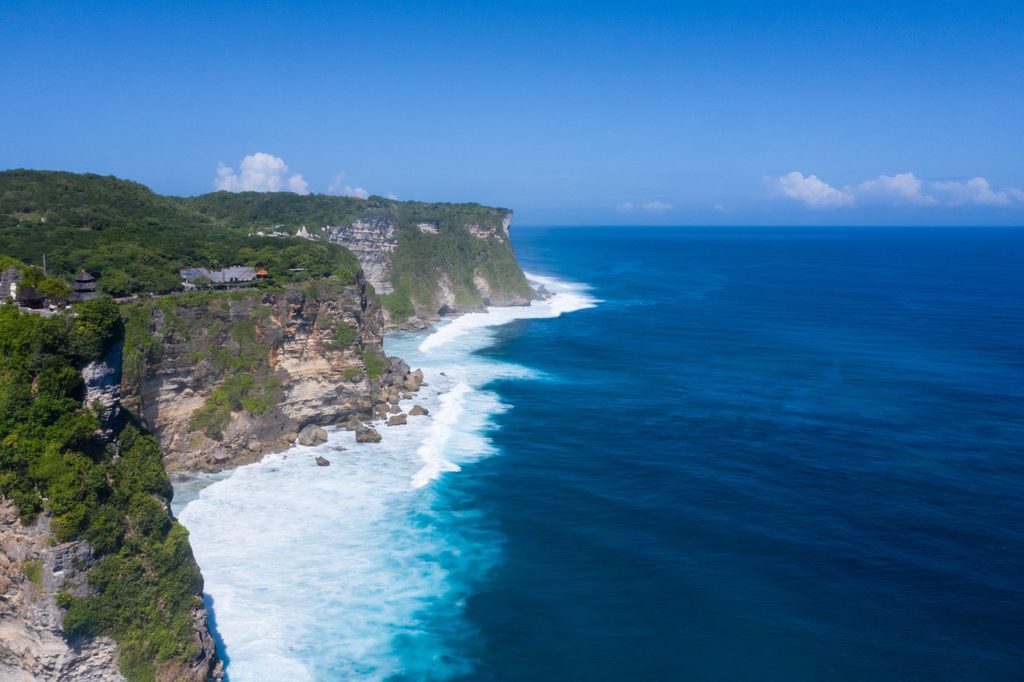
The Bukit Peninsula’s terrain is part of the story. Dramatic limestone cliffs limit how much coastal land can actually be built on compared to the flatter stretches further north, and the area developed later than Canggu or Seminyak as a tourism destination. Much of its existing accommodation supply historically skewed toward private villas rather than branded hotels, particularly around Uluwatu and Pecatu.
Administratively, Uluwatu and Pecatu sit within Badung Regency, in the South Kuta district. That distinction matters more now than it did a few years ago. Following major flooding across Bali in September 2025, Bali’s provincial government imposed a moratorium restricting new hotel, villa, and restaurant construction on agricultural and rainwater-absorption land. A formal construction ban was also applied to six districts: Tabanan, Jembrana, Buleleng, Bangli, Karangasem, and Klungkung.
Badung, along with Gianyar and Denpasar, is excluded from that formal ban, meaning new tourism development in Uluwatu and Pecatu continues under standard permitting rather than a blanket freeze. This helps explain why hotel projects such as CROSS Bali Uluwatu and Mandarin Oriental Bali continue to move forward on the peninsula, while development in some other parts of the island has slowed.

Mandarin Oriental Hotel Group announced in 2024 that it will manage a new luxury resort and branded residences on the Bukit Peninsula, developed in partnership with local real estate developer Harmoni Bali. Mandarin Oriental Bali is set to open in 2027, positioned on a cliffside plateau with 110 suites and villas, alongside 68 branded residences set on an 8-hectare site above the hotel. Construction on the first residence units was reported to be underway as of mid-2026.
That a global ultra-luxury operator chose the Bukit Peninsula for its first Bali property, rather than the more established Ubud or Seminyak corridors, is itself a signal that international brands now see the area as underdeveloped relative to its natural appeal. CROSS Bali Uluwatu, developed by PT The Cube Group under a Hotel Management Agreement with SONO Trinity, is another entrant into the same corridor, positioned in Pecatu near Suluban Beach.

Colliers’ Q2 2026 Bali Hotel Market Report projects approximately 1,700 new hotel rooms across Bali between the second half of 2026 and 2029, with every unit of that pipeline concentrated in the five-star segment. Colliers identifies Ubud and Canggu as the primary growth corridors, followed by Jimbaran, Uluwatu, and Nusa Penida, reflecting where developers believe premium, experience-driven demand will remain strongest.
A separate analysis, PT Hotel Investment Advisory’s Bali Hotel Market Risk & Absorption Monitor 2026, offers a more granular, area-specific view. It reports that the Jimbaran-Pecatu-Ungasan corridor carries the heaviest concentration of new-room supply on the island, with approximately 688 rooms scheduled for completion between November 2026 and September 2028. The same report found that demand growth in this corridor is currently outpacing supply growth, with a positive absorption balance of +1.6 percentage points over the twelve months to July 2026, the second-strongest reading on the island after Sanur’s +2.7 percentage points.
It is worth being direct about how these two data points sit together. A corridor can show both a genuinely strong demand-to-supply balance today and a meaningful concentration risk looking forward, and Jimbaran-Pecatu-Ungasan currently shows signs of both. PT Hotel Investment Advisory’s own more recent commentary, published in September 2026, frames the same 688-room pipeline as a risk factor worth watching, projecting the corridor’s occupancy easing to around 68.2 percent in 2027 under a moderate scenario, a healthy figure but a step down from Sanur’s projected 84.6 percent.
Neither of these figures should be read as a verdict on any single property. They describe an area-wide balance across dozens of hotels of different sizes, brands, and market positioning, not the performance of any one development. A newly built, internationally branded upper-upscale hotel competes on different terms than the broader area average, but that also means broad occupancy projections for the corridor are only loosely predictive of what any individual property, including CROSS Bali Uluwatu, will actually achieve once it opens.
The Bukit Peninsula’s combination of limited buildable coastal land, its exemption from Bali’s formal construction moratorium, and continued interest from international operators supports a genuine case for the area’s long-term hospitality relevance, a case explored further in our comparison of Uluwatu and Canggu for hotel investors. At the same time, the concentration of new supply specifically in the Jimbaran-Pecatu-Ungasan corridor over the next two years is a real factor to weigh, not a detail to set aside because the demand story currently looks favorable.
Land scarcity plus rising branded demand can support pricing power for well-positioned developments, but that is a structural observation about the corridor, not a return projection for any specific project. Investors should treat corridor-level supply and absorption data as context for a decision, and look separately at a given property’s own brand backing, construction status, and site-specific factors before drawing conclusions about its individual prospects.
Its cliff terrain limits buildable coastal land, it developed later as a tourism destination than areas like Canggu or Seminyak, and much of its historical accommodation supply has been villas rather than branded hotels.
No. The formal six-district construction ban, introduced after September 2025 flooding, covers Tabanan, Jembrana, Buleleng, Bangli, Karangasem, and Klungkung. Uluwatu and Pecatu sit in Badung Regency, which is exempt from that formal ban.
Mandarin Oriental Bali is scheduled to open in 2027 with 110 suites and villas plus 68 branded residences. CROSS Bali Uluwatu, developed by PT The Cube Group, is also under construction in the same corridor.
Approximately 688 rooms are scheduled for completion between November 2026 and September 2028, according to PT Hotel Investment Advisory, the largest concentration of new supply of any Bali sub-region in that window.
The Jimbaran-Pecatu-Ungasan corridor currently shows demand outpacing supply, with a positive absorption balance, but it also carries the island’s heaviest new-supply concentration through 2028, a factor worth monitoring rather than dismissing.