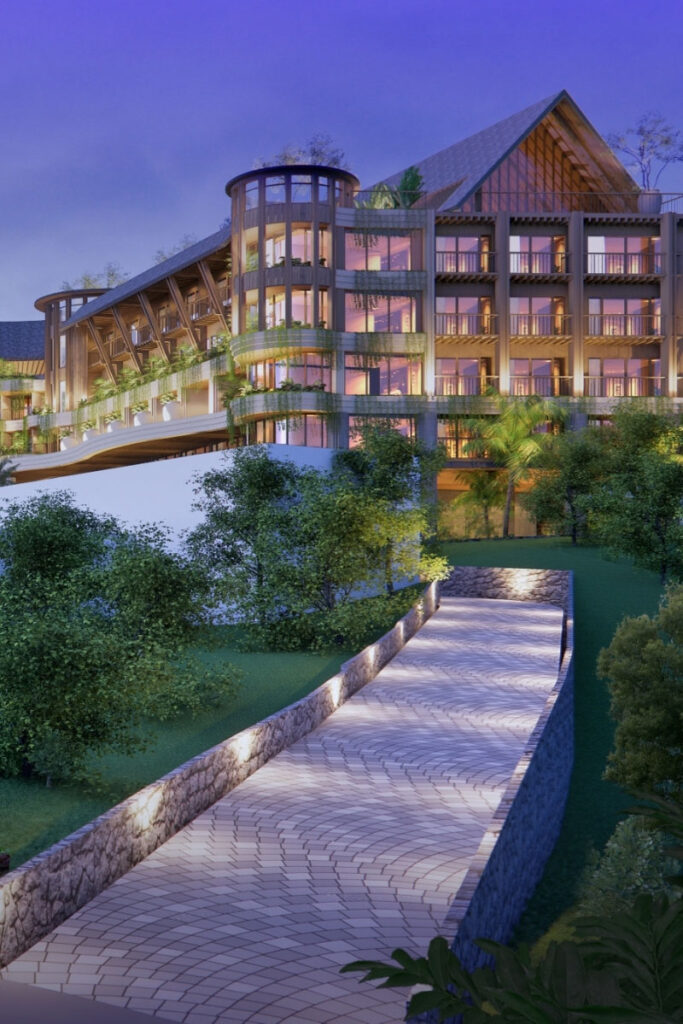
Bali is projected to add roughly 1,700 new luxury hotel rooms between the second half of 2026 and 2029, according to Colliers, with all planned supply concentrated in the five-star segment. This Bali hotel pipeline is concentrated in five key growth corridors, with Ubud and Canggu leading the way, followed by Jimbaran, Uluwatu, and Nusa Penida.
Understanding where that new supply is landing, and how demand is tracking against it by area, matters more to an investor than the headline number alone. A modest island-wide pipeline can still mean meaningfully different conditions corridor by corridor.
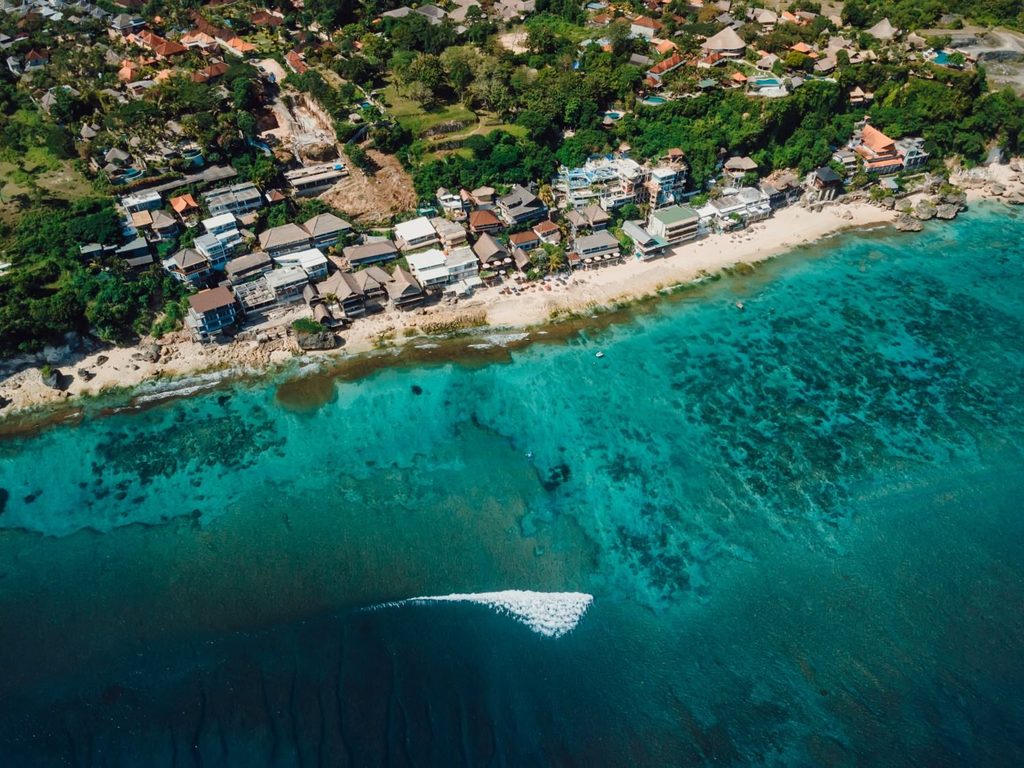
Colliers’ Q2 2026 Bali Hotel Market Report puts Bali’s total hotel inventory at approximately 62,000 rooms as of the second quarter of 2026, following the completion of 197 new rooms that quarter, partly offset by a temporary closure of roughly 100 rooms elsewhere on the island for renovation. Against that base, Colliers projects around 1,700 additional rooms entering the market between the second half of 2026 and 2029, forming a Bali hotel pipeline equivalent to roughly 2.7 percent growth in total inventory over more than three years.
That is a modest expansion in relative terms, representing roughly 2.7 percent growth in total inventory over more than three years. The more relevant story is where that growth is concentrated: every planned unit in the pipeline sits in the five-star segment, and Colliers reports Bali’s hotel sector maintaining resilient average daily rates of around USD 149 to 151, alongside occupancy holding stable at roughly 63 to 65 percent through the second quarter. In other words, this is a luxury-tier growth story, not a broad volume expansion.

Colliers identifies Ubud and Canggu as Bali’s main growth corridors for new luxury supply, followed by Jimbaran, Uluwatu, and Nusa Penida. Developers are increasingly targeting destinations that support wellness, nature, and lifestyle-driven positioning rather than traditional high-density tourism formats, a shift Colliers attributes to a broader move toward higher-spending international travelers over volume growth.
A separate, more granular analysis from PT Hotel Investment Advisory (HIA), published through its Bali Hotel Market Risk & Absorption Monitor 2026, provides a more detailed view of the hotel pipeline in Bali by sub-region. As of August 2026, HIA reported approximately 2,460 hotel rooms under construction island-wide, with supply concentrated as follows: Jimbaran-Pecatu-Ungasan carries the heaviest load at approximately 688 rooms (completion window November 2026 to September 2028), followed by the wider Bali Regional Area at roughly 645 rooms, Canggu-Seminyak at approximately 558 rooms, Ubud at roughly 361 rooms, and Nusa Dua-Tanjung Benoa at 203 rooms. Kuta and Legian add just 8 rooms, while Sanur has no active construction projects at all.
It is worth flagging that Colliers and HIA are measuring different things. Colliers’ area ranking reflects where developers are choosing to build looking forward from an investment-strategy lens; HIA’s figures are a more granular count of rooms currently under construction by sub-region. The two are not directly contradictory, but they answer slightly different questions, and an investor citing one should not assume it confirms the other.
HIA’s report also tracks what it calls the “absorption balance,” the difference between growth in occupied room demand and growth in room supply over the trailing twelve months. As of July 2026, Sanur posted the strongest positive absorption balance at +2.7 percentage points, meaning demand for occupied rooms grew faster than supply, a healthy sign given Sanur has no new rooms under construction at all. Jimbaran-Pecatu-Ungasan followed with the second-strongest balance at +1.6 percentage points, indicating that despite carrying the island’s heaviest new-supply load, demand in that corridor has so far kept pace.
By contrast, HIA’s analysis found that Ubud and Canggu-Seminyak have seen room rate growth support revenue per available room even as room-night demand volume has declined, a different and more mixed pattern than a straightforward supply-demand balance would suggest. A more recent HIA update, published in September 2026, frames some of Bali’s oversupply risk more directly, noting that concentrated new-room pipelines in specific corridors, including Jimbaran-Pecatu-Ungasan’s 688 rooms, warrant monitoring even where current absorption looks favorable.
A modest, luxury-concentrated island-wide pipeline paired with corridor-specific demand strength, rather than blanket oversupply, points toward selective opportunity rather than uniform caution, a theme also explored in our piece on the Bukit Peninsula’s underbuilt hotel investment case. Sanur and Jimbaran-Pecatu-Ungasan currently show the healthiest demand-to-supply balance on the island, while Ubud and Canggu-Seminyak, despite drawing the largest share of Colliers’ forward-looking pipeline focus, show more uneven demand signals in HIA’s more recent data.
None of this should be read as a guarantee for any individual property. Area-level absorption and hotel pipeline in Bali data describe a corridor’s overall balance across many hotels of different brands, sizes, and positioning, not the specific performance of any one development. A newly built, internationally branded hotel entering a corridor with a favorable absorption balance, such as CROSS Bali Uluwatu in the Jimbaran-Pecatu-Ungasan area, benefits from that broader context, but its own outcome still depends on brand execution, positioning, and timing that area-wide statistics cannot predict.
Approximately 1,700, according to Colliers’ Q2 2026 Bali Hotel Market Report, with the entire pipeline concentrated in the five-star segment.
Colliers identifies Ubud and Canggu as the main growth corridors going forward, followed by Jimbaran, Uluwatu, and Nusa Penida. By rooms currently under construction, PT Hotel Investment Advisory places Jimbaran-Pecatu-Ungasan at the top with approximately 688 rooms.
Not uniformly. Sanur and Jimbaran-Pecatu-Ungasan currently show positive absorption balances, meaning demand growth is outpacing supply growth in those corridors, while other areas show more mixed signals. More recent industry commentary flags concentrated pipelines, including Jimbaran-Pecatu-Ungasan’s, as worth monitoring.
It is the difference between the growth in occupied room demand and the growth in room supply over a given period. A positive balance means demand for rooms is growing faster than new rooms are being added.
Colliers reported island-wide occupancy holding stable at roughly 63 to 65 percent through the second quarter of 2026, with performance varying meaningfully by area and hotel tier.