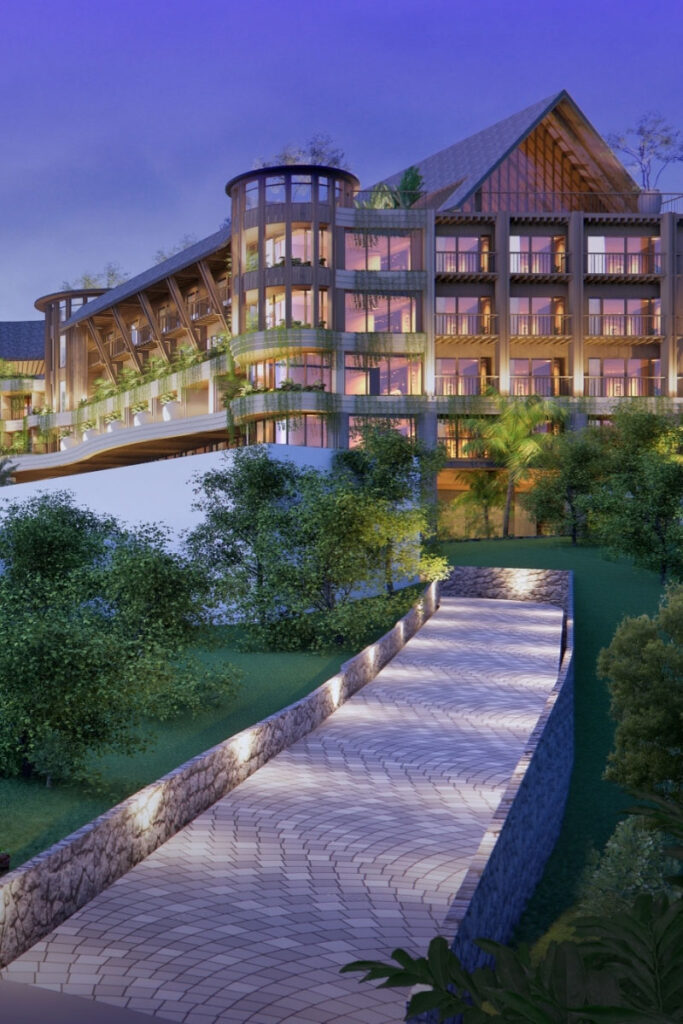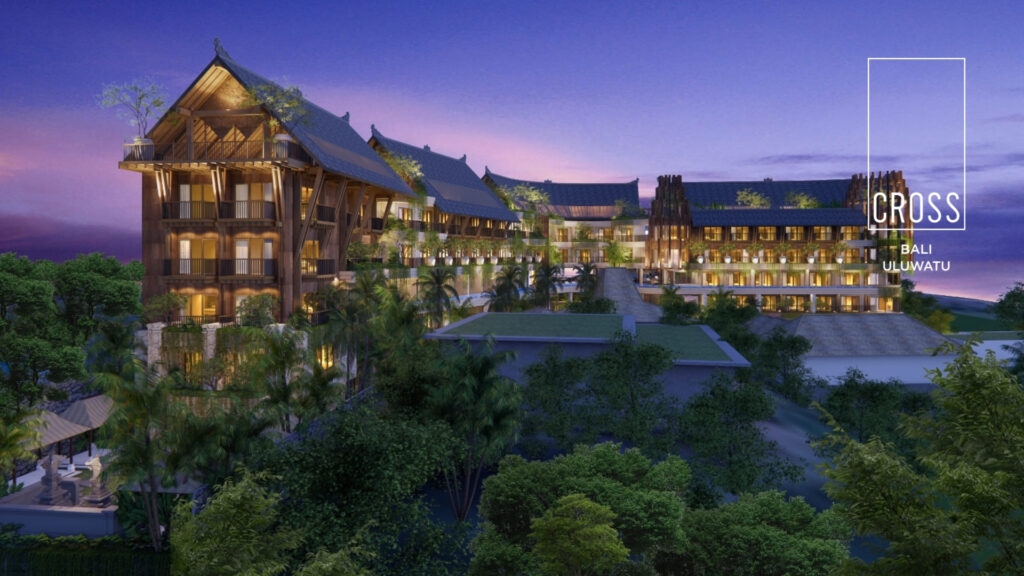
CROSS Bali Uluwatu is a 123-key upper-upscale resort development in Pecatu, Uluwatu, developed by Cube Bali (PT The Cube Group) under a Hotel Management Agreement with Cross Hotels & Resorts, part of Sono International’s SONO Hotels and Resorts Asia platform, positioned around 200 metres from Suluban Beach.
The project sits inside Cube Bali’s broader Community, Culture, Capital development philosophy, and represents Cross Hotels & Resorts’ expansion into one of Bali’s most established surf and luxury tourism corridors. For a developer, signing an international operator for a project this size is a structural decision that shapes financing, design standards, and how the asset is positioned to future buyers, not just a branding choice. This article covers the project’s structure, design, location, and current development status.
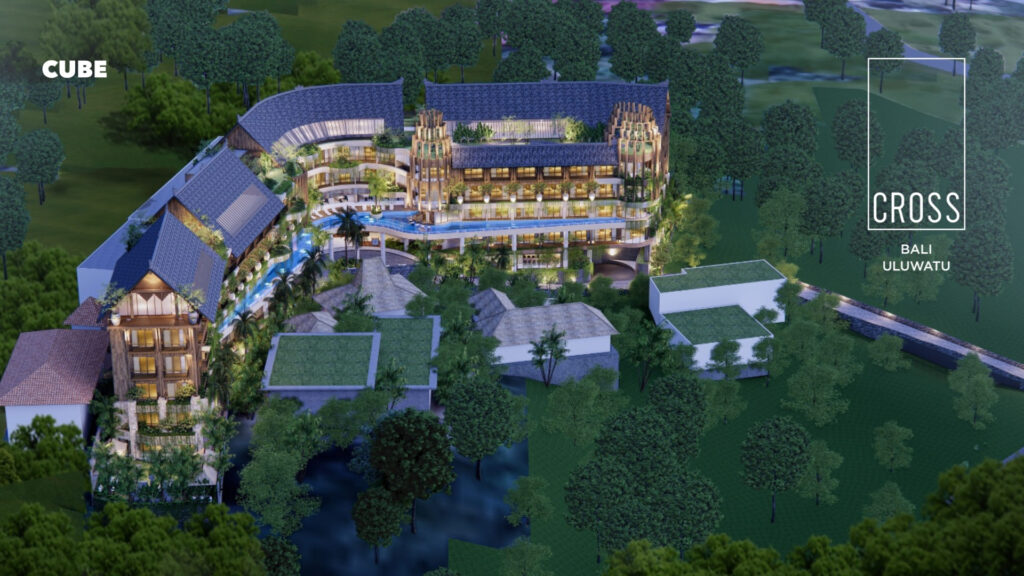
The project is announced at 123 keys in Cross Hotels & Resorts’ own release, with subsequent coverage citing a range of approximately 123 to 130 keys as the design has progressed. Both figures come from official sources, and the range reflects normal refinement during development rather than a discrepancy to resolve.
CROSS Bali Uluwatu sits within the upper-upscale segment of Cross Hotels & Resorts’ portfolio. The agreement between Cube Bali and Cross Hotels & Resorts includes a 12-year Hotel Management Agreement with extension options, alongside a Technical Support Agreement covering the build-out phase. The Technical Support Agreement is a separate arrangement from the management contract itself, and typically covers brand-standard alignment during design and construction, so the hotel opens built to the operator’s specifications rather than being retrofitted after the fact.
Cross Hotels & Resorts operates as a wholly owned subsidiary of Sono International, a South Korean hospitality group with more than 12,000 operating rooms across Korea, the United States, France, and Vietnam. That scale places CROSS Bali Uluwatu inside an established international operating platform rather than a standalone management arrangement, which matters for an investor weighing brand reliability and distribution reach against a project’s asking terms.
The land is held through a PT PMA structure with Hak Guna Bangunan (HGB) title, described in the project’s official announcements as the most secure structure for foreign investment in Indonesia. The site also carries full Tourism Zoning designation, which is the land use classification required for commercial hotel development in Bali, distinct from residential or agricultural zoning that would block a hotel license outright.
A PT PMA is the standard Indonesian legal vehicle for full foreign ownership of a business, and HGB is the registered right to build and hold structures on land for an initial term, renewable over time, since foreign entities cannot hold freehold (Hak Milik) title directly. Holding both the corporate structure and the land title correctly from the outset avoids the retrofitting and compliance risk that can come with less formal arrangements. A closer look at how this structure compares to other ownership models covers the legal picture in more depth.

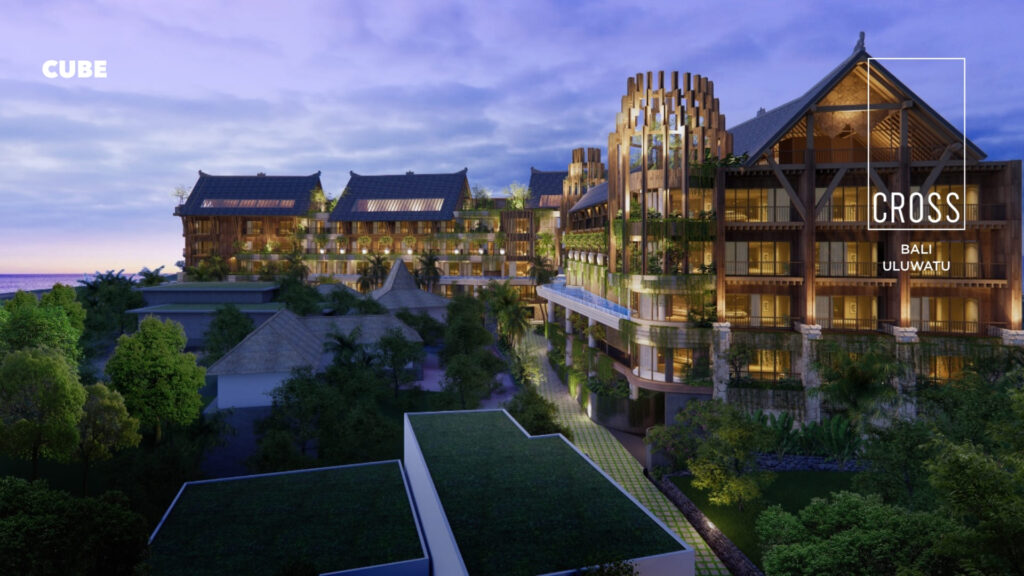
Architecture for CROSS Bali Uluwatu is by Piter Gan, described by Cube Bali as integrating modern elegance with local sensibilities. The design work is guided by regenerative design principles, with Green Building certification named as a target alongside long-term commercial value. Regenerative design, as distinct from simply minimizing environmental impact, aims for a development that actively contributes to the site’s ecological and social conditions rather than just reducing harm.
As of the most recent official updates, the development has secured its building permit, with earthworks nearing completion and infrastructure works advancing on site. Securing the building permit ahead of full construction is a meaningful milestone in Bali, where zoning and permitting delays are a common source of project risk for hotel developments generally. Construction status changes as a project progresses, so this should be verified against the latest project updates before being cited as current.

The site sits roughly 200 metres from Suluban Beach, one of Uluwatu’s best known surf and cultural landmarks, a distance confirmed directly in Cube Bali’s own project materials rather than third-party estimates. Suluban’s combination of surf tourism and cliffside cultural sites has drawn visitors to the immediate area for decades, giving the location a demand history that a newer or less established site would not carry. A deeper look at Pecatu’s location and what it means for hotel investment covers the surrounding area, distances to other landmarks, and why the location matters commercially, beyond what fits here.
Cross Hotels & Resorts frames its brand positioning around design-led hospitality, and CROSS Bali Uluwatu is described in the company’s own materials as a curated destination built around relaxation, culture, and connection, consistent with the upper-upscale tier the brand operates in across its broader portfolio. That positioning also aligns with Cube Bali’s own Community, Culture, Capital development framework, which the company applies across its projects rather than treating each development as a standalone asset.

A 12-year Hotel Management Agreement with extension options ties the property to Cross Hotels & Resorts’ brand standards, distribution channels, and operating systems for a fixed, contractually defined period rather than an informal or short-term arrangement. For an investor, that duration matters because it sets the horizon over which brand-driven demand, rate positioning, and operational consistency are contractually secured, rather than left to a management relationship that could lapse or be renegotiated on short notice.
The Technical Support Agreement running alongside it addresses a separate but related risk: a hotel built without operator input during design frequently needs costly retrofitting to meet brand standards once management begins. Aligning design and construction with Cross Hotels & Resorts’ specifications from the outset removes that gap, so the property opens ready to operate under the brand rather than adapting to it afterward.
CROSS Bali Uluwatu combines four things that do not always come together in a single Bali hotel project: a scale large enough to clear Indonesia’s foreign-ownership thresholds for hotels, an internationally established operator backing the brand, a location with decades of proven surf and cultural tourism demand, and a legal structure built on PT PMA and HGB title rather than a workaround arrangement.
Each of those four factors addresses a different risk that smaller or less structured Bali hotel projects commonly carry: regulatory risk around foreign ownership scale, operational risk from an unproven or informal management arrangement, demand risk in an unestablished location, and legal risk from a land title that does not hold up to scrutiny. A project that clears all four at once is not the only viable structure in the market, but it is a materially different starting position than one that clears only one or two.
For investors evaluating hotel opportunities in Bali, that combination is worth weighing against smaller or less established alternatives. Cube Bali’s Invest page has project documentation and current investment terms for those looking to review the opportunity directly.
The project is announced at 123 keys, with subsequent coverage citing a range of approximately 123 to 130 keys as design work has progressed. Both figures appear in official project sources.
Cube Bali (PT The Cube Group), a Bali-based real estate and hospitality developer, is the developer. The hotel is managed under agreement with Cross Hotels & Resorts.
Cross Hotels & Resorts, a wholly owned subsidiary of Sono International’s SONO Hotels and Resorts Asia platform, operates the property under a 12-year Hotel Management Agreement with extension options.
The project sits in Pecatu, Uluwatu, on an ocean-facing site roughly 200 metres from Suluban Beach.